
Taste level comes before skills, and Kevin Paul Santos’ expansive career is proof of that
By September Grace Mahino
May 04, 2026
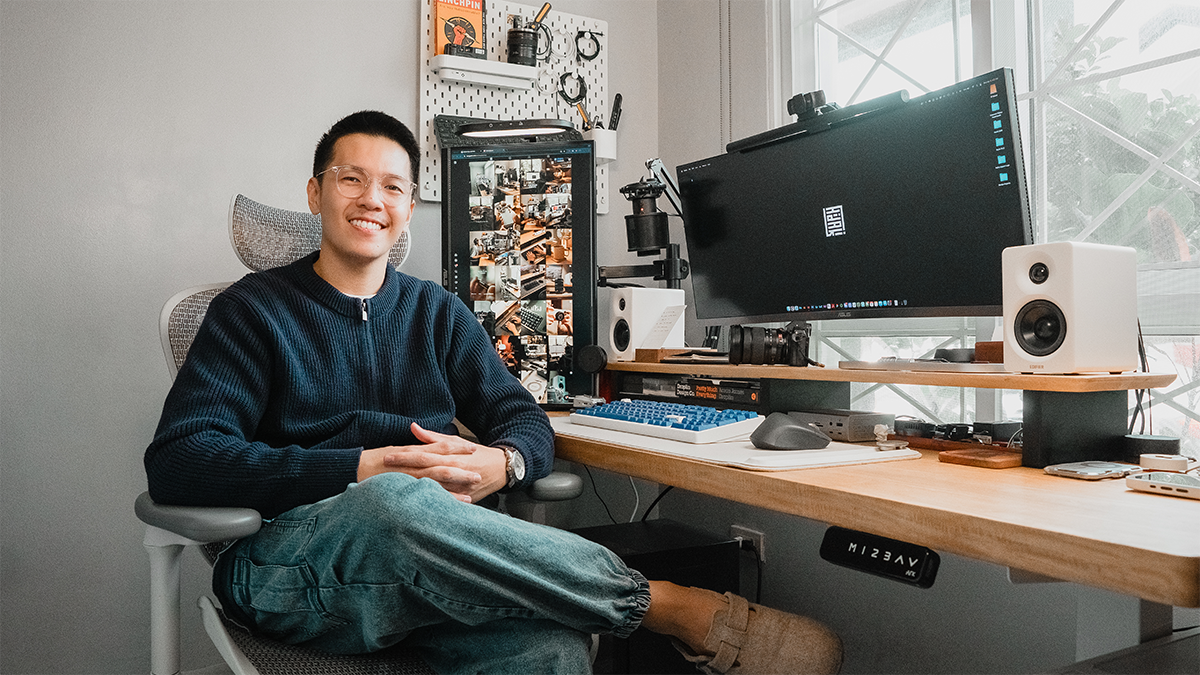
Communication designer and current Executive Vice-President of the Communication Designers Association of the Philippines (CDAP), Kevin Paul Santos, would be the first to admit that his design journey had unorthodox beginnings.
He was already in college, taking an information technology-related course, when his interest in design was sparked during a group project. Tasked with polishing his team’s presentation, Santos played around with typography and different color stories before settling on a design. He would then tweak the placements of the various visual elements until he was satisfied with how everything looked. Upon presenting his work in class, “I got a positive impression about it, and that sparked something in me,” he tells CREATEPhilippines. “I thought, ‘Okay, maybe there’s potential here.’ That’s when I started to take design more seriously.”
Santos took the autodidact’s path in becoming a graphic designer. He immersed himself in design by reading blogs and watching internet tutorials, looking for actual designs rather than names to study. Whenever he’d see a poster he liked, he’d try to recreate it through “reverse-engineering,” looking up instructions on how to achieve specific effects. “That’s how I learned how to design.”
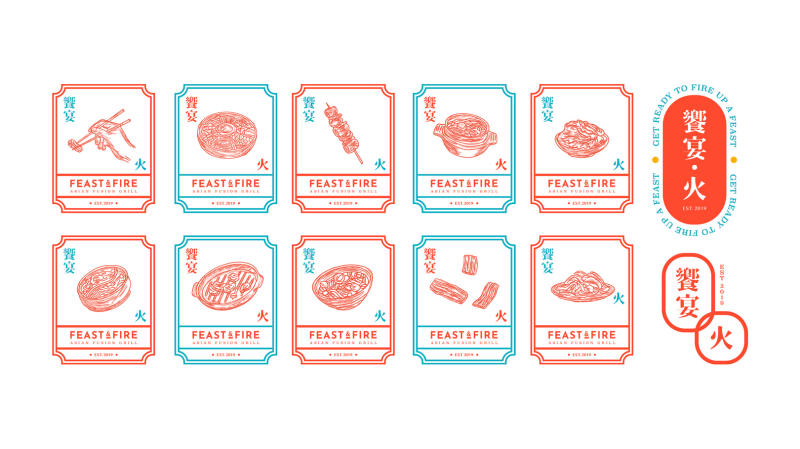
For a purist, that might not be a legitimate path toward building a design career, but so far, Santos has been doing quite well for himself. He founded his own creative agency at 23, and then 5 years later, in 2019, he set out to establish the branding and design studio House of Hidaki together with his wife, interior designer Jesse Tud-Santos. House of Hidaki’s roster of clients spans the range of small local businesses to global organizations, from retail to real estate to media.


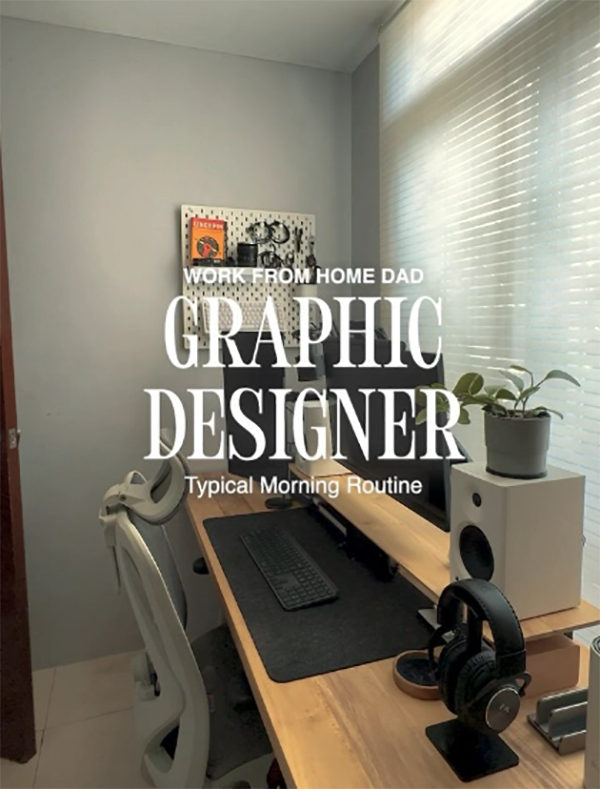
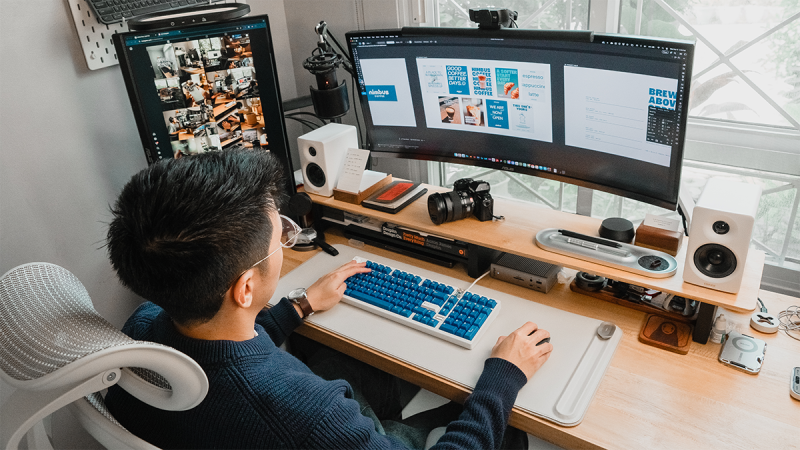
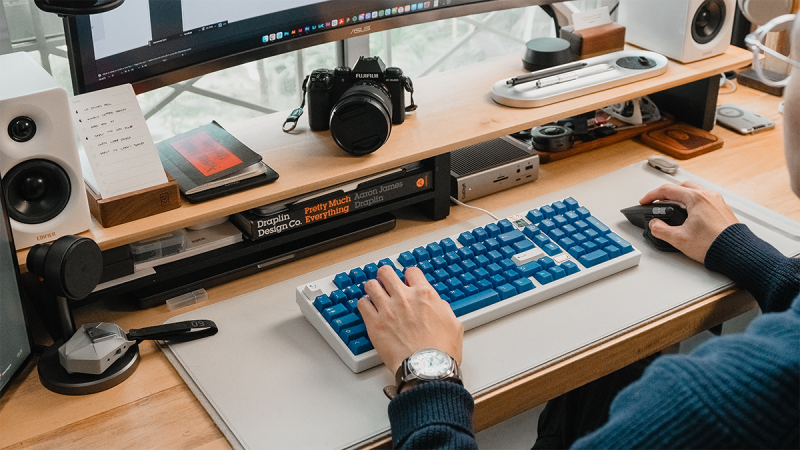
Santos has since added “content creator” to his resume. His Instagram account (@kevinpaulsantos) is a trove of pictures and tranquil clips that feature his life as a designer and a dad. “If I could summarize my entire career into one sentence, from advertising to branding and now, content creation, I’d say my work has always been about helping brands communicate clearly and with purpose,” he reflects. “Even as a content creator, I tell stories through my point of view, stories on how specific products are used by designers.”
Santos’s style and method of simply doing the thing, whether it’s getting into branding design or establishing his own company or becoming a content creator, may seem risky to the more reticent types. However, the way he sees it, going all in is just the next step to take after finding something he’s passionate about. What matters, he says, is that a creative has the eye and the palate for their discipline of choice. “As long as you have good taste in design, or in any creative pursuit, really, then your skills will definitely find ways to up your game.”
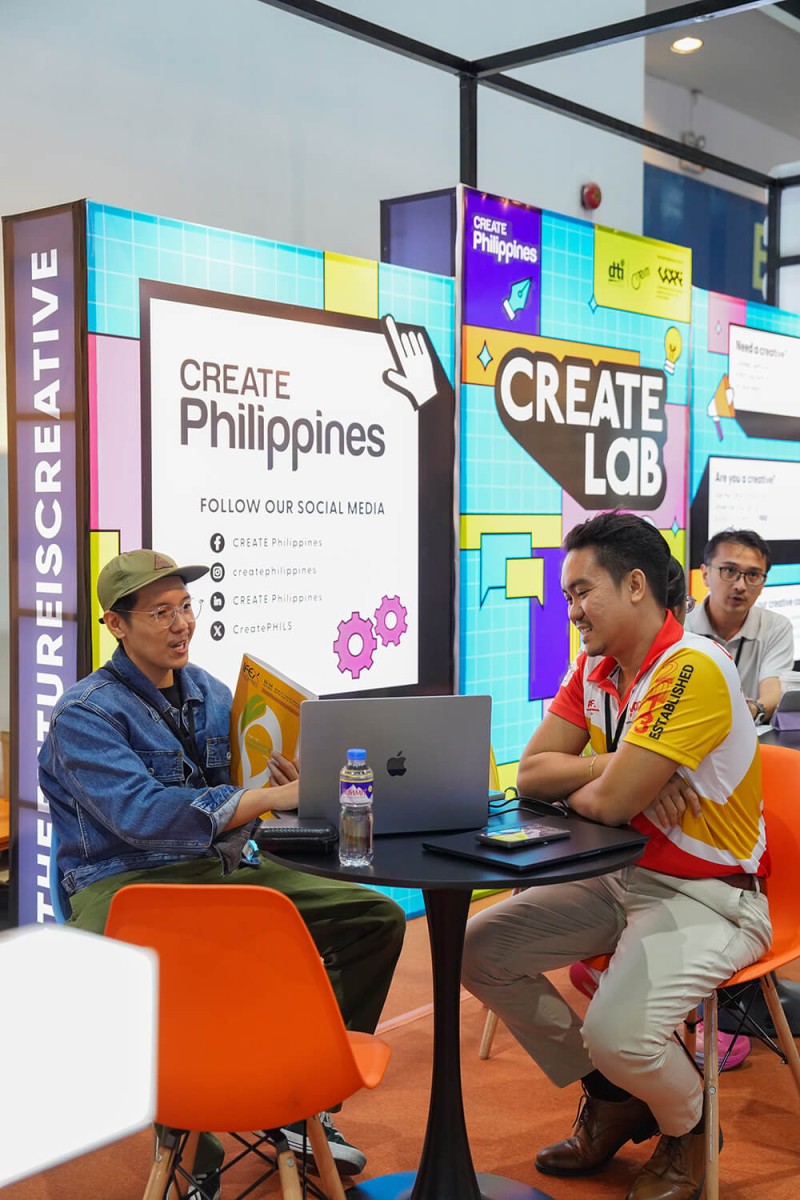
As a CDAP officer, he has been helping local entrepreneurs develop their own taste and eye for business branding by taking part in CREATELab. A design clinic organized by CDAP with CREATEPhilippines, CREATELab has design experts giving free consultations to the micro, small, and medium enterprises (MSMEs) participating in the Center for International Expositions and Missions’ (CITEM) signature events, IFEX Philippines and Manila FAME. “I really enjoy being part of CREATELab because I get to meet clients in their current status, including the challenges they face in their business,” Santos says. “It always excites me to talk to people, hearing them, and, somehow, giving them some advice and suggestions on what to do with their brand, offering whatever expertise I have.”
With IFEX Philippines 2026 just around the corner—and, therefore, the latest edition of CREATELab also soon to happen—CREATEPhilippines visited Santos in his Quezon City home to talk about creative growth, both his own and that of Philippine design.
You established a creative agency soon after graduating from college. What motivated you to do it? And is that something you’d advise a young designer to do?
After I had left my first job post-graduation, I applied to a startup marketing agency. Since it was a small team, I got to see the process of how the founder built the company from the ground up, including the logo and website. That’s what the founder assigned me to do, actually: Create the logo and the company branding. I stayed there for a year and learned as much as I could, and I was also inspired by the founder’s leadership. That made the idea of building something on my own really fun.
It wasn’t an easy path to run my own business as a freelancer, though. There were months when there were no clients. Eventually, I found a retainer client, and that allowed me to have a runway to continue operating my business. Honestly, I don’t recommend young creatives to start on their own without a solid plan of what to do.
Did the difficulty of finding clients lead you to take on projects that didn’t necessarily align with your vision and values?
In terms of values and filtering clients to work with, I honestly didn’t have that luxury then. Starting companies frequently take whatever work there is to survive. But of course, I also had to gauge each potential client’s vibe. There has to be mutual respect. Maybe my gut instinct saved me from clients I wasn’t fit to work with, because it was really more through friends’ referrals that my business was able to survive those early days.
You then went on to put together House of Hidaki. What was the impetus behind starting over with a new creative business?
Well, the first business I established leaned more toward advertising and creative communications, so more on campaigns, posters, point-of-sales merchandise, etc. The work was fast-paced, and at some point, I found myself tired of that kind of life. I have to say, though, that those 5 years of running my creative agency were also a period of amazement. Seeing the output of local and international designers and design studios, especially in terms of brand identity and packaging design, was so inspiring. That’s why in 2019, my wife and I started House of Hidaki. We wanted to have a more relaxed pace by working on building the clients’ core identities and public faces. We wanted to be able to sit down and think, “What is a good design system for this brand?” From the logo to the typography, the colors, the imagery, the style… It’s like giving birth to something, given the parameters shared by the client. I’ve found that kind of work very fulfilling.
Was it easier to find clients who were willing to invest in their branding in 2019?
No, not in the beginning. Not everyone saw the value of designing and marketing to business; to most business people, they’re just additional expenses, and they’d rather spend their money on their companies’ operational aspects. But my wife and I demonstrated to potential clients how branding is a form of investment since it shapes a business’s visual identity. It is what compels people to approach a brand in the first place and convinces them to make a purchase.
Convincing people to invest in good design is also at the heart of what CDAP and CREATEPhilippines do with CREATELab. Is there anything particularly challenging when meeting business owners through the design clinic, aside from the limited time designers have in talking to them?
I can say that the challenging part is identifying what the business owners actually need. Sometimes, they think they already know that, but while talking to them and learning what their business is going through and what makes them believe in the solution they have in mind, I discover something different. So my role is not to give them answers right away. It’s more of just listening to them, asking the right questions, and helping them uncover the right path to take to navigate their business.
CREATELab’s first edition, which was held at IFEX Philippines 2025, facilitated a total of 120 consultation sessions between MSME owners and communication designers over three days. Is that a good indication of how local enterprises have come around to the idea that branding design is a crucial aspect of their business?
To me, the fact that they signed up and approached CREATELab shows how aware our MSMEs are that they need help with branding design. I think they’ve come to recognize how good design can help their businesses scale. They actually asked, “How can I improve my logo? How can I improve my packaging? Is this okay?” They’re in a receiving mode. But like I’ve said, instead of just giving advice, I asked them questions, too. That way, at least, they know that their business has a problem, and not just design-based ones. Kasi there are those whose design systems already have good foundations; they just need to be seen. For others, their problem is that they don’t have a set design system yet. Those are the ones who really need a designer to help them be confident to face the audience.
You’ve worked with not just local but also international clients, and have thus seen Filipino designs side by side with foreign works. What do you think sets our work apart? Where do we excel?
Based on what I’ve experienced, in general, we Filipinos are good at storytelling, in connecting with the emotions of their customers. That’s why a lot of the ads and marketing promotions that local brands produce don’t directly sell, like they’re not very product-centric. Filipinos think of ways to promote a specific product or service by touching their audience’s emotions first. That’s where the warmth and being emotionally connected to the audience comes in.
Another one is that we adapt to global trends very quickly. We can actually leverage that to go international. Marketing trends, design trends—any trend, we can apply it very quickly locally. And it’s not a matter of copying something directly: We’re adapting it while, at the same time, iterating it. We’re infusing our culture into the works that we produce.
You took a different path in getting into design and establishing your career. As a self-taught designer, how do you view the evolution of your work? How would you describe it?
I can say that I was lucky to have become a designer in an era when people liked to use text effects. Today, there are still people like that, but the effects are no longer as loud; there’s a more minimalist approach to design now. I guess my taste has adapted to the current trends as well, since I don’t like loud designs anymore. But that’s the thing: Even if your skills do not match your taste level, that’s okay. Your taste level must always come first. As long as you build your taste and your eye for design, you’ll find ways to raise your skills to meet it. It should always be like that.
What can young designers do to ensure sustainability not just in their design career but also in their creativity?
The key to longevity is to really enjoy what you’re doing, because if you don’t enjoy it, you’re going to give up on it. You’re going to look for another thing to do, whereas when you enjoy what you’re doing, you invest time in developing your skills, in learning new things, in learning the craft. Those will come naturally.
My advice for young designers is to build your foundation. Develop your taste by immersing yourself in good designs—designs that inspire you. Immerse yourself in the kind of work that would be your dream job. It’s about being involved in the community. Look for mentors, and connect with people who have the same interests or the same vibe. Ask them questions, too. It’s okay to ask; what’s not okay is not even touching what you’re interested in. There are no stupid questions, because there’s always something that you can learn.
***
Calling all Filipino entrepreneurs in the F&B industry: Get a free design consultation through CREATELab at IFEX Philippines 2026 by registering here to secure a slot.
To learn more about Kevin Paul Santos’s works, follow him on Instagram and visit his website.
Want to connect with Kevin? Get in touch by filling out the Connect with a Creative form. Want to be part of our creative community and have the chance to be featured on CREATEPhilippines? Sign up and register for our Directory of Creatives here. Join our Viber community, too, and follow us on Instagram, Facebook, X, and LinkedIn to be updated on the creative events that we’re promoting.
Photos by Camille Dellosa.